Post_Histories is a series of interactive media carousels by ADHD that borrows the grammar of the multi-image social post and redirects it toward the contextual window of art. The HTML viewer scrolls through found footage, screengrabs, paintings, collages, and GIFs before resolving into a nested feed, a station within the station, that the viewer can browse deliberately or detonate into “ADHD mode,” where every channel plays at once. That closing gesture is the argument itself: an attempt to render, formally, the recursive and slightly uncanny way media now metabolizes us. Stripped to its essentials, the work is interactive multi-media collage, and it is also, not incidentally, a fairly literal transcription of what it feels like to be online.
The title deliberately straddles posthistory and post-history, holding open several readings at once: the history that begins once humanity started posting; the history that follows and results from a rupture; the history of what comes after human development altogether; the history of a single user's posts. Fragmentation isn't a stylistic choice, it's just how information actually arrives now, the way a film can drop you into a scene mid-conversation and trust you to feel your way into everything that happened just off-screen. That space of inference, of productive not-knowing, is where the work lives. Its deeper concerns are the paradoxes of information and progress: that unprecedented access to knowledge seems to correlate with a general dulling, that “advancement” arrives shadowed by real regression. He holds simultaneous sympathy for the burned-out fatalism of Gen Z and the horrified fury of Gen X, equally capable of undercutting a solemn moment with a joke or being undone by the sight of litter on the sidewalk.
Materially, the work continues a vibe-coding experiment ADHD began the previous year, born from residency conversations about artificial intelligence and its place in the studio. An earlier HTML slider piece, Becoming Myself, became the template from which, working alongside Claude, he built a customizable Media Carousel Builder called Sliding Doors, a still-image collage engine called Cohesion, and a video-painting and effects studio called Resonator. From there the process splits into curation and construction. He archives, near-compulsively, anything encountered online that bears on the practice, then edits it through some of the same software used by so-called professional content creators and influencers: CapCut, Riverside, Canva, and the like. Tools built for audience capture and engagement metrics get repurposed here into something more self-aware, closer to alchemy.
Linear time is the lens history insists on, yet the further an event recedes, the less legible its originating moment becomes, a blurring that mirrors precisely how memes propagate: born specific and personal, then worn smooth through countless hands until origin is no longer recoverable. The ouroboros, an image more than three thousand years old, remains for him the most precise available depiction of that condition, and pairing found imagery against invented imagery is his way of manufacturing that same blur with purpose and intent. When it comes to history's unraveling or problems of paradox, solutions were never really the point. ADHD offers company instead: a hand extended to anyone willing to walk, together, into the unresolved question of what our collective histories will become.
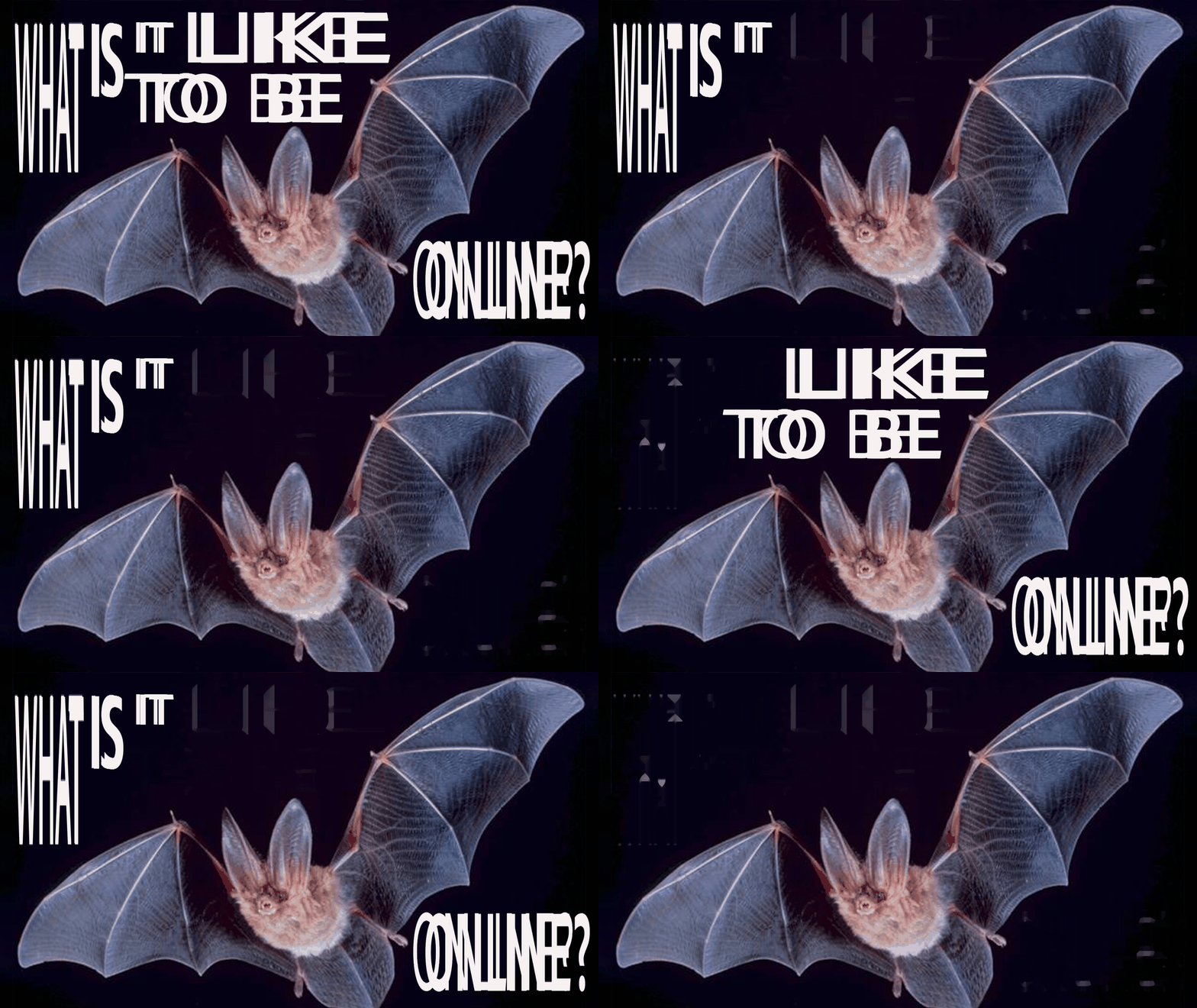
ADHD is the moniker of Philadelphia-based artist and musician Colin Frangicetto. His gritty, hyper-layered works channel a language of cohesive chaos to explore memetics, alienation, and post-internet decadence. More recently, he has expanded his practice into moving images and conceptual works, experimenting with animated GIFs, found footage, and interactive HTML collage. Alongside his visual art, Frangicetto has spent decades touring internationally as a musician, bringing a DIY ethos shaped by punk, skateboarding, graffiti, and internet culture to both disciplines.